When your future depends on the details, every decision matters.
With us, your in good hands.

A Canadian study permit is the immigration document that authorizes most foreign nationals to study in Canada for programs longer than six months. Prospective clients often search for this process using several phrases, including Study Permit Canada, Canada study visa, student visa Canada, international student permit, college visa Canada, and university study visa. Search engines may treat those phrases differently, but IRCC still asks one core question: does this application make sense and does the evidence support it?
Officers review the file as a whole. They do not look only at the letter of acceptance. They assess your program choice, your previous education, your finances, your ties outside Canada, your travel history, and the credibility of your study plan. Strong files feel organized, realistic, and coherent from start to finish.
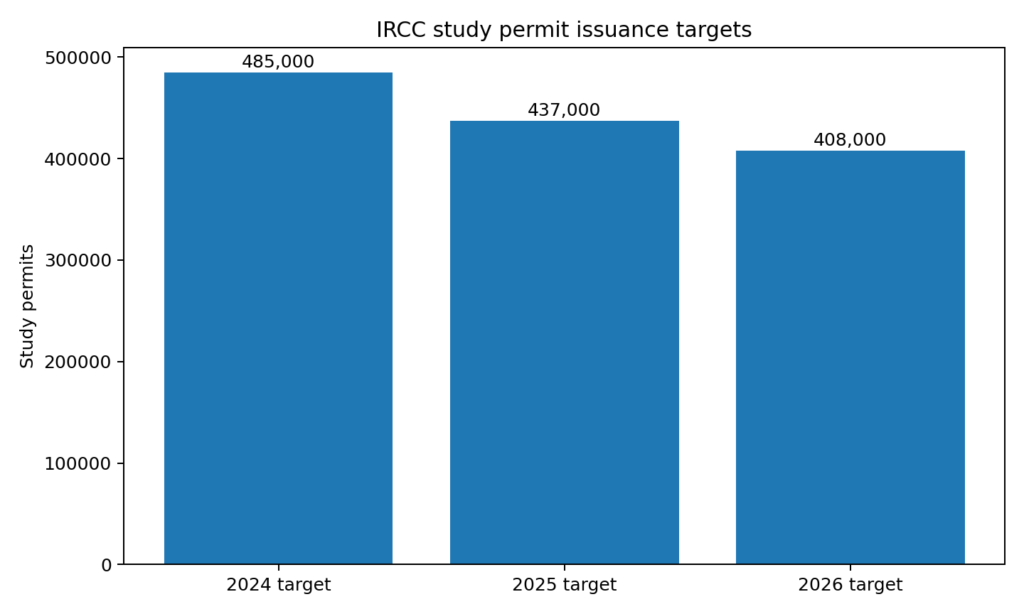
Current IRCC guidance also confirms that most study permit applicants now need a provincial or territorial attestation letter, known as a PAL or TAL, unless they fit within an exemption. Students heading to Quebec usually need a CAQ instead. That requirement affects timing, tuition planning, and document strategy, so early preparation matters more than ever.
Canada attracts students because the country offers recognized education, multicultural communities, work opportunities during studies, and post-graduation pathways that can support longer-term immigration planning. Families often view Canada as a stable destination with clearer government rules and stronger institutional safeguards than many competing markets.
Yet opportunity alone does not secure approval. A winning application shows real academic purpose, credible funding, and a program choice that fits the applicant’s background. When those pieces line up, the file becomes easier for an officer to approve.
As of the current IRCC fee schedule, the study permit application fee is CAD $150 and biometrics usually adds CAD $85. Restoration cases cost more because the applicant must pay the restoration amount plus the new study permit fee. Students should also budget for medicals, translations, tuition deposits, police certificates, courier charges, and any professional help needed to strengthen the case.
| Government fee | Amount | Notes |
| Study permit application | CAD $150 | Applies to most new applications and many extensions |
| Biometrics | CAD $85 | Usually required unless the applicant is exempt |
| Restoration of status as a student | CAD $246.25 | Separate from the new permit fee |
| Restoration + new study permit | CAD $396.25 | Combined amount when both are needed |
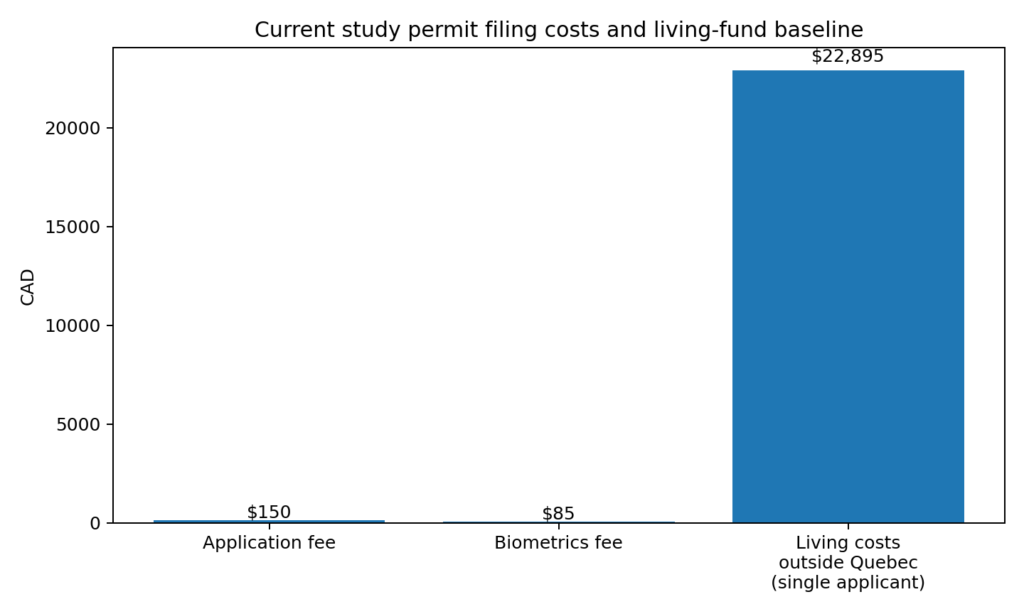
Proof of funds is one of the biggest issues in study permit cases. IRCC currently states that a single applicant outside Quebec who applies on or after September 1, 2025 must show CAD $22,895 for living expenses, excluding tuition and travel. That threshold rises when family members accompany the student.
Numbers alone rarely solve the problem. Officers want to understand where the money came from, whether the funds are genuinely available, and whether the financial story matches the family’s real circumstances. Tuition receipts, sponsor letters, bank records, employment material, business documents, tax records, and GIC evidence can all help when they fit the broader narrative.
Study permit refusals often grow out of several smaller issues rather than one dramatic error. A refusal letter may mention purpose of visit, financial concerns, family ties, or the logic of the proposed studies. Those short labels usually point to a deeper credibility problem inside the file. In some cases, the student chose a program that does not fit prior education or work history. In others, the statement of purpose sounds generic, the source of funds looks weak, the documents conflict with each other, or the file never explains why this course in Canada makes sense at this stage of the applicant’s life. Sometimes the person may be eligible in theory but the submission still fails because it does not answer the officer’s real concerns clearly. A stronger reapplication usually addresses the refusal head-on, explains the academic plan in detail, clarifies the financial picture, and presents one consistent story instead of a pile of disconnected documents.
A stronger study permit file does not rely on volume. It relies on strategy. The study plan should explain why the program is relevant now, why Canada is the right destination, how the studies connect to future work or business plans, and how the applicant will fund the full period of study. Forms must match the supporting evidence. Previous refusals should be addressed directly instead of ignored. Travel history should be framed honestly. When risk factors exist, a tailored legal submission can make the difference between confusion and clarity.
A study permit extension allows international students in Canada to continue their studies legally when their current permit is nearing expiry. To apply for a study permit extension in Canada, students must submit their application before the expiration date to maintain status and remain in compliance with IRCC requirements. Applicants must provide proof of continued enrollment at a designated learning institution (DLI), updated financial documents showing the ability to support tuition and living expenses, and a clear explanation of their academic progress.
Failing to apply on time can result in loss of status, requiring a restoration application within 90 days, which carries additional risk and cost. A properly prepared study permit extension application ensures continuity of studies, protects future immigration opportunities such as Post-Graduation Work Permits (PGWP), and reduces the chances of delays or refusal by addressing all eligibility requirements upfront.
International students often ask how common-law status may affect future immigration planning or a spouse’s work permit. IRCC’s current guidance states that a common-law partner is at least 18 years old, is not legally married to you, and has lived with you in a marriage-like relationship for at least 12 consecutive months. Short temporary separations for work, business travel, or family obligations may still fit that definition if the relationship remained ongoing and the time apart stayed brief.
That definition matters because common-law claims often fail when couples cannot prove real cohabitation. Joint leases, shared bills, matching IDs, bank records, insurance policies, and other day-to-day documents can become critical. Students who think they may rely on common-law status later should start preserving that evidence early.
One well-timed consultation can save months of delay. YS Canada Visa Services helps students and families prepare stronger study permit applications, review refusal letters, and build smarter reapplication strategies. If you need help with a Study Permit, a student visa refusal, or a complex funding or travel-history issue, call us to book a consultation.


Immigration appeals allow individuals to challenge a refusal or removal decision through the Immigration Appeal Division or Federal Court in Canada.

A refused visa to Canada occurs when an application is denied due to reasons such as insufficient documentation, weak ties to the home country, or failure to meet IRCC requirements.
Misrepresentation in Canadian immigration occurs when false or misleading information is provided, which can lead to refusal and a potential five-year ban from entering Canada.