When your future depends on the details, every decision matters.
With us, your in good hands.

An Intra Company Transferee application can open the door to Canada for foreign businesses that want to move key personnel into a Canadian operation. This LMIA-exempt pathway lets qualifying companies transfer executives, senior managers, and specialized knowledge employees to a branch, subsidiary, affiliate, or qualifying related entity in Canada. Many business owners search for this route under several names, including ICT Canada, intra company transfer Canada, intra-company transferee work permit, business transfer visa Canada, Canadian ICT work permit, and corporate transfer to Canada. Search terms vary, but the core goal stays the same: move the right employee into Canada with a strong, credible file.
At YS Canada Visa Services, we build Intra Company Transferee cases with strategy, not guesswork. Our team reviews the corporate structure, the foreign entity, the Canadian entity, the employee’s role, the timing of the transfer, and the long-term immigration goal before we draft a single explanation letter. Businesses call us because they want more than a checklist. They want a plan that makes sense to Immigration Canada and supports future growth in Canada.
If you want to bring an executive, manager, or specialized knowledge worker to Canada, book a consultation today. A properly structured ICT application can help you launch operations, stabilize expansion, and put your business in a stronger position for future work permit renewals and permanent residence planning.
Canada’s Intra Company Transferee program sits within the International Mobility Program. It allows a foreign business to transfer certain employees to a Canadian company that has a qualifying corporate relationship with the foreign enterprise. In most cases, the Canadian employer must submit an offer of employment through the Employer Portal, pay the employer compliance fee, and support the application with corporate and job evidence. The worker then applies for an employer-specific work permit.
This pathway usually fits three groups. The first group includes executives who direct the management of the company or a major component of it. The second group includes senior managers who manage all or part of the enterprise and supervise other managers, professionals, or essential functions. The third group includes specialized knowledge workers who hold advanced proprietary knowledge or a high level of expertise that is important to the Canadian operation. Officers do not approve a case because a company uses a strong title. They approve a case because the evidence shows a real transfer, a real business need, and a role that matches the legal category.
A strong ICT file starts with the right facts. The foreign worker normally must have worked for the foreign company for at least one continuous year in the previous three years in a similar full-time position. The foreign and Canadian businesses must have a qualifying relationship, such as parent, branch, subsidiary, or affiliate. The Canadian operation must also show that it can support the transfer. In expansion cases, the business must show it has a realistic plan to start operating in Canada and enough resources to do it.
Approval turns on the details. Officers want to see real operations abroad, a clear organizational chart, payroll evidence, corporate records, and a role in Canada that fits the employee’s background. They also want to see what the Canadian entity will do, how it will earn revenue, who will manage it, and why this particular employee must come to Canada now. When the file answers those questions early, the case becomes much stronger.
Executives usually direct the company or a major part of it and make high-level decisions. Senior managers usually manage the enterprise, a department, a subdivision, or a key function. Specialized knowledge workers bring uncommon knowledge of the company’s products, services, systems, methods, research, equipment, or processes. Many refusals happen because employers describe the role in broad business language without proving how the employee fits one of these categories. A clean title does not save a weak file. Detailed duties, reporting lines, evidence of authority, and proof of company-specific expertise carry much more weight.
Expansion cases need even more care. Immigration officers expect a serious business plan, a lease or premises strategy, financial capacity, hiring plans, product or service details, and a timeline for Canadian operations. They also expect the file to show why the company needs this transferee in Canada instead of hiring locally from day one. We help clients answer that question with evidence and business logic.
Government fees matter because they shape budgeting, filing strategy, and family planning. As of March 2026, the standard work permit processing fee is $155 per worker. Biometrics usually add $85 per person if biometrics are required. For most LMIA-exempt employer-specific ICT filings, the Canadian employer also pays a $230 employer compliance fee through the Employer Portal. If a spouse applies for an open work permit, that file usually includes the $155 work permit fee plus the $100 open work permit holder fee, along with biometrics if applicable. Government fees can change, so we confirm the latest fee structure before filing.
Those government fees do not cover business plan preparation, legal submissions, translations, document certification, medicals if required, or family member applications. A rushed filing often becomes more expensive later because refusals, reapplications, and weak supporting records create delays and extra professional work. We prefer to build the case correctly the first time.
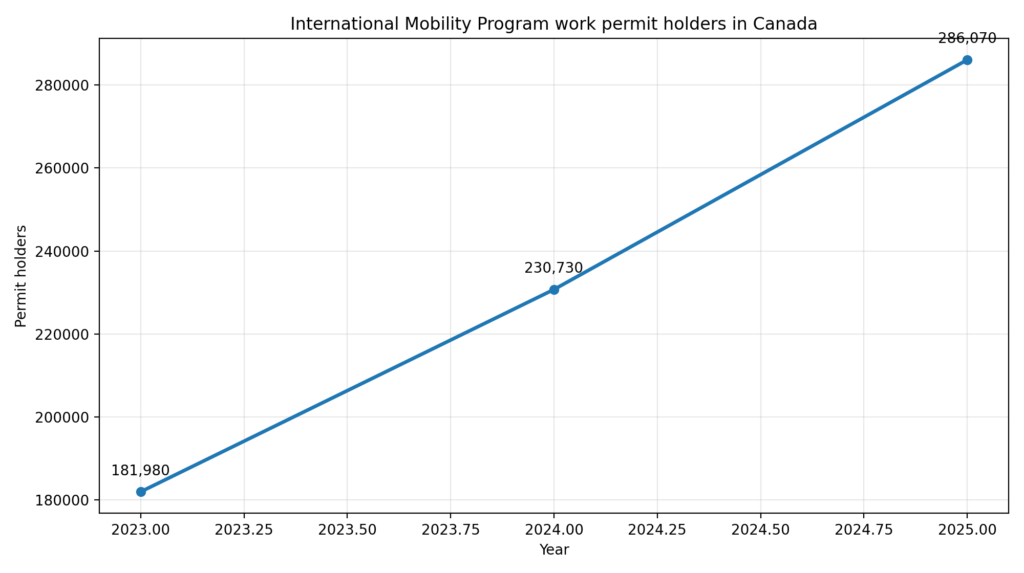
The Intra Company Transfer route appeals to businesses because it can avoid the Labour Market Impact Assessment process. That saves time and also fits the reality of an internal corporate transfer. Companies do not use ICT simply to fill a vacancy. They use it to move a key employee who already understands the business, the systems, the people, and the growth plan. That advantage often makes a major difference during Canadian expansion.
A well-prepared ICT application can also support broader immigration goals. Business owners often use the transfer to establish Canadian operations, bring a spouse and children, create a record of Canadian business activity, and position themselves for future permanent residence strategies. The work permit itself does not guarantee PR, but it can form a strong part of a larger immigration plan when the case is built with foresight.
Many ICT applicants travel with a spouse or partner, so common-law rules matter. Immigration Canada currently treats a common-law partner as a person who has lived with you in a conjugal relationship for at least 12 consecutive months, with only short and temporary absences allowed. Proof usually includes shared leases, joint bills, mail to the same address, shared bank records, insurance, or other documents that show a genuine combined household. A weak common-law package can create unnecessary problems for an otherwise strong business immigration file.
Families often assume that a relationship explanation alone will be enough. Officers expect documents. If the principal applicant is relocating through an intra-company transfer and a partner plans to apply as an accompanying spouse or common-law partner, the relationship evidence should be organized with the same care as the main work permit package. We help families coordinate the principal ICT file and the family documents so the applications support each other instead of creating inconsistencies.
Refusals usually happen because the file leaves too many unanswered questions. Some employers do not prove the qualifying relationship between the foreign business and the Canadian business clearly enough. Some applicants cannot show one full year of qualifying employment in the previous three years. Other files describe a managerial or executive role in vague terms and fail to prove real authority, reporting lines, budget control, decision-making power, or the supervision of senior staff. Specialized knowledge applications face refusal when the evidence looks generic, transferable, or common in the market rather than truly proprietary or advanced.
Officers also refuse expansion cases when the Canadian business plan looks thin. A simple incorporation document rarely proves a viable operation. The file should show premises or a premises plan, financial capacity, startup funding, expected revenue, hiring needs, contracts or market evidence where available, and a practical timeline for operations. Refusals also arise when payroll records, tax documents, organizational charts, job descriptions, or ownership records conflict with each other. In some cases, the applicant may qualify in theory, but the documents do not tell a clear story. That gap leads to refusal.
We strengthen applications by removing those gaps before filing. We match the facts to the proper ICT category. We build detailed support letters. We organize corporate evidence so the officer can follow the structure quickly. We explain the business need, the employee’s history, the transfer logic, and the Canadian rollout plan in plain, persuasive language. Strong applications do not hope that the officer will connect the dots. Strong applications connect the dots on the page.

Start with the corporate structure. Your documents should clearly show the relationship between the foreign and Canadian entities. Add articles, shareholder records, annual filings, tax records, payroll evidence, company brochures, websites, contracts, and a clean organizational chart where relevant. Move next to the employee evidence. Use job descriptions, pay records, reference letters, reporting lines, résumés, and records of specialized projects or proprietary systems. Then build the Canadian narrative with a strong business plan, premises details, financial capacity, and a realistic explanation of why the transfer benefits the Canadian operation.
Consistency matters just as much as substance. The job title, duties, salary, dates, and reporting structure must line up across every document. The business plan should match the support letter. The support letter should match the Employer Portal offer. The worker’s background should match the role in Canada. When those pieces align, the file feels credible. When they clash, officers notice quickly. We review every layer of the application to reduce that risk.
Businesses and professionals call our office because they want practical legal guidance, not generic online advice. We understand the real issues that affect ICT cases: expansion strategy, corporate structure, qualifying duties, family coordination, timing, refusals, and long-term immigration planning. Our job is to turn a complicated business immigration process into a clear action plan.
We can assess whether the role fits executive, managerial, or specialized knowledge criteria. We can help prepare the work permit strategy, the family applications, and the supporting legal submission. We can also review prior refusals and identify where the original package failed. Every strong file starts with the same step: an honest review of the facts. If you want to bring key personnel to Canada, call us and book a consultation.
A good ICT case can support market entry, operational control, family relocation, and future immigration planning. A weak one can waste months and put your business expansion on hold. If you are planning an intra company transfer to Canada, need help with an ICT refusal, want to transfer a manager or executive, or need a strategy for a new Canadian office, contact YS Canada Visa Services today.
Call now to book a consultation. We will review the business structure, the employee’s role, the available documents, and the strongest path forward for your Intra Company Transferee matter in Canada.
| Fee item | Amount | Comment |
| Work permit processing fee | $155 | Principal ICT worker |
| Biometrics | $85 | Usually required unless exempt |
| Employer compliance fee | $230 | Usually paid by the Canadian employer for LMIA-exempt employer-specific filings |
| Open work permit holder fee | $100 | Usually added for a spouse’s open work permit |
Government fees can change, so we confirm the latest amounts before filing.
Current information checked against official IRCC and Canada.ca pages in March 2026, including work permit fees, employer compliance fee guidance, common-law partner guidance, and recent IMP arrival statistics.


Immigration appeals allow individuals to challenge a refusal or removal decision through the Immigration Appeal Division or Federal Court in Canada.

A refused visa to Canada occurs when an application is denied due to reasons such as insufficient documentation, weak ties to the home country, or failure to meet IRCC requirements.

Misrepresentation in Canadian immigration occurs when false or misleading information is provided, which can lead to refusal and a potential five-year ban from entering Canada.