When your future depends on the details, every decision matters.
With us, your in good hands.

A Canadian Visitor Visa, also called a Temporary Resident Visa or TRV, opens the door to family visits, tourism, business meetings, conferences, and short personal trips to Canada. Many applicants assume the process is simple. In reality, officers study each file carefully and test whether the trip makes sense, whether the documents match the story, and whether the applicant will leave Canada at the end of the authorized stay. At YS Canada Visa Services, we help clients prepare strong visitor visa applications, respond to refusals, and reduce the risk of problems at the border. If you want to visit Canada with confidence, start with a strategy that treats your case seriously from day one.
A Visitor Visa is the counterfoil placed in a passport to show that a visa office found the applicant eligible to travel to Canada as a temporary resident. IRCC describes it as an official document that shows you meet the requirements needed to travel to Canada, while also making clear that a border officer still decides whether you may enter Canada on arrival. In practice, people use many search terms for the same process, including Canada visitor visa, Canadian tourist visa, temporary resident visa Canada, TRV Canada, travel visa to Canada, and visit visa for Canada. Using these terms naturally helps search visibility and also matches the way real clients search online.
Citizens of many countries need a visitor visa before they travel to Canada. Some travellers need an eTA instead, so the first step always involves checking document requirements for your nationality and travel plans. A visitor visa usually serves people who want to visit family or friends, attend a wedding, explore Canada as a tourist, come for a short business trip, or deal with a personal matter that does not authorize work in Canada. Business visitors may still need a TRV if they come from a visa-required country, even when they do not need a work permit for the activities planned in Canada.

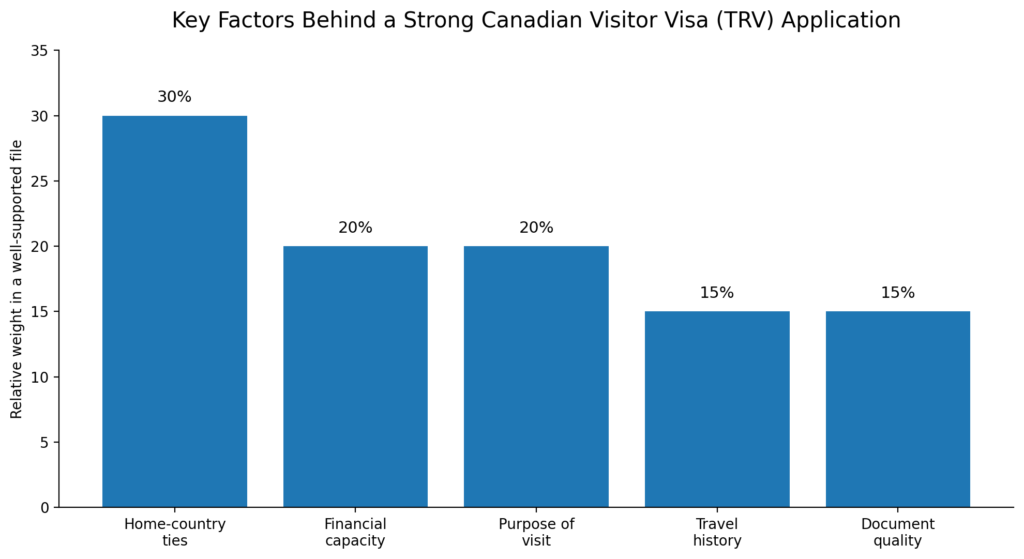
Officers want a clear, credible, well-documented story. A strong application usually shows a genuine purpose of travel, stable employment or business activity outside Canada, enough money for flights and expenses, a logical itinerary, and persuasive ties that pull the applicant back home. Good ties may include employment, property, ongoing studies, close family responsibilities, active business operations, or a history of compliant travel. A strong file also stays consistent from top to bottom. Your forms, bank records, invitation letter, travel plan, and personal explanation should all point in the same direction.
Many applicants ask whether business travel helps more than leisure travel. The honest answer is nuanced. Canadian law does not create an automatic approval lane for business visitors. Still, business travel often gives officers a clearer, tighter narrative to assess because the applicant can usually show an employer letter, conference registration, meeting agenda, invitation from a Canadian company, and a defined travel period. That kind of evidence can make a case easier to understand and easier to trust. Leisure travel can absolutely succeed, but tourism files often need stronger proof of ties, finances, and travel logic because they may rely more heavily on the applicant’s own explanation. In other words, business travel does not guarantee approval, but a business purpose often gives the application stronger structure when the documents support it properly.
Visitor visa refusals usually happen because the evidence leaves room for doubt. IRCC states that reapplying with the same information will likely not change the result, which means the refusal reasons matter. Common refusal themes include weak home-country ties, limited finances, an unclear purpose of travel, poor travel history, inconsistent documents, concerns that the applicant may overstay, and concerns tied to previous refusals or immigration history. A refusal does not always mean the person lacks merit. Many refusals happen because the file did not explain the case well enough, did not organize the evidence properly, or did not answer the officer’s likely concerns in advance.
A visitor visa refusal rarely comes from one isolated detail. More often, the officer sees several small weaknesses that combine into one larger concern about temporary intent. Employment may look unstable, bank records may show sudden deposits with no explanation, the invitation may sound generic, the travel purpose may remain vague, and the forms may leave gaps that weaken trust. When that pattern appears, the officer may conclude that the applicant has not shown strong reasons to leave Canada at the end of the visit. Ties to the home country matter a great deal, so weak job evidence, no proof of business activity, limited family obligations, or no property can hurt the file. Financial evidence matters just as much, so unsupported funds, borrowed money, or low available balances can raise fresh doubts. Travel history also plays a role because it helps officers see whether the applicant has followed immigration rules in other countries. Previous refusals, overstays, visa breaches, or inconsistent answers can make scrutiny even tighter. Some cases become more difficult because the applicant hides a prior refusal, submits translated documents that do not align with the originals, or uses a purpose of visit that sounds manufactured instead of real. Even when the trip itself is genuine, a weak presentation can push the application toward refusal. Strong applications win because they answer the officer’s questions before the officer asks them.
Can an approved visitor visa still lead to border problems?
Yes. A visa helps you travel to Canada, but it does not guarantee admission. IRCC says a border services officer makes the final decision at the port of entry. That point matters because some travellers receive a visa and still run into trouble when their answers at the airport do not match the application, when officers discover undisclosed criminal or immigration issues, or when the purpose of the trip appears different from what the applicant declared. A visitor visa strategy should therefore do two jobs at once: secure visa approval and reduce the risk of being denied entry to Canada after arrival.
Can a DUI or criminal issue affect a visitor?
Yes. Criminal inadmissibility can block entry to Canada even for a short visit. IRCC explains that people found inadmissible may be denied a visa, refused entry, or removed from Canada. A DUI may create problems even when the offence seems minor in another country. If a criminal record exists, the visitor visa strategy must account for admissibility before anyone books travel. In some cases, a Temporary Resident Permit or Criminal Rehabilitation may become the real solution, not a standard visitor visa filing alone.
How to make a visitor visa application stronger
Start with a precise purpose of travel. Add a detailed invitation, itinerary, or business agenda. Show stable income and accessible funds with clear source documents. Prove your ties with strong employment letters, business records, school enrolment records, property evidence, and family responsibilities where relevant. Address any prior refusal directly instead of pretending it did not happen. If your case has a weak point, explain it honestly and support the explanation with evidence. Applicants who submit generic packages often lose. Applicants who present a tailored, organized, and credible file put themselves in a far stronger position.
| Why strategy matters: a second application should not repeat the first package with a few extra pages. It should directly answer the refusal concerns with stronger evidence and a better organized narrative. |
What happens after a refusal?
IRCC does not offer a formal appeal process for most temporary residence refusals. In most cases, the practical path involves either reapplying with stronger evidence or considering judicial review where the facts support it. IRCC also announced on March 18, 2026 that refusal letters now proactively include officer decision notes, which can help applicants understand the real reasons behind the decision. That update matters because stronger reapplications come from targeted fixes, not guesswork. A refusal should trigger a strategic review, not a rushed second filing.
People contact us because they want more than form-filling. They want a legal strategy that anticipates officer concerns, organizes the evidence properly, and speaks to the real issues that decide temporary resident cases. We review your profile, identify refusal risks, prepare persuasive submissions, and help you present a coherent visitor visa file from the start. If you were already refused, we help you understand what went wrong and what to change before you try again.
| Book a consultation before you apply or reapply If you want to visit Canada for family, tourism, or business, do not leave your application to chance. A refusal can waste months, damage future applications, and create stress right before an important trip. Call YS Canada Visa Services today to book a consultation. We can assess your visitor visa case, strengthen your Temporary Resident Visa application, and help you move forward with confidence. Call us today to review your visitor visa strategy. |

Immigration appeals allow individuals to challenge a refusal or removal decision through the Immigration Appeal Division or Federal Court in Canada.

A refused visa to Canada occurs when an application is denied due to reasons such as insufficient documentation, weak ties to the home country, or failure to meet IRCC requirements.

Misrepresentation in Canadian immigration occurs when false or misleading information is provided, which can lead to refusal and a potential five-year ban from entering Canada.